LLMSX Explorer — The Dynamic Research Workbench
Explore any field you thought you knew
Most technical domains look familiar until you map their invisible frontiers, structural tradeoffs, and failure modes. LLMSX Explorer is an interactive, high-density research terminal and visualizer designed to turn static documentation into an accelerated learning loop.
# Install with Textual TUI support
python -m pip install 'https://llms-explorer.com/downloads/llmsx/llmsx-0.2.4-py3-none-any.whl[tui]'

# Launch the terminal workbench (auto-clones the concept tree on first run)
llmsx explorer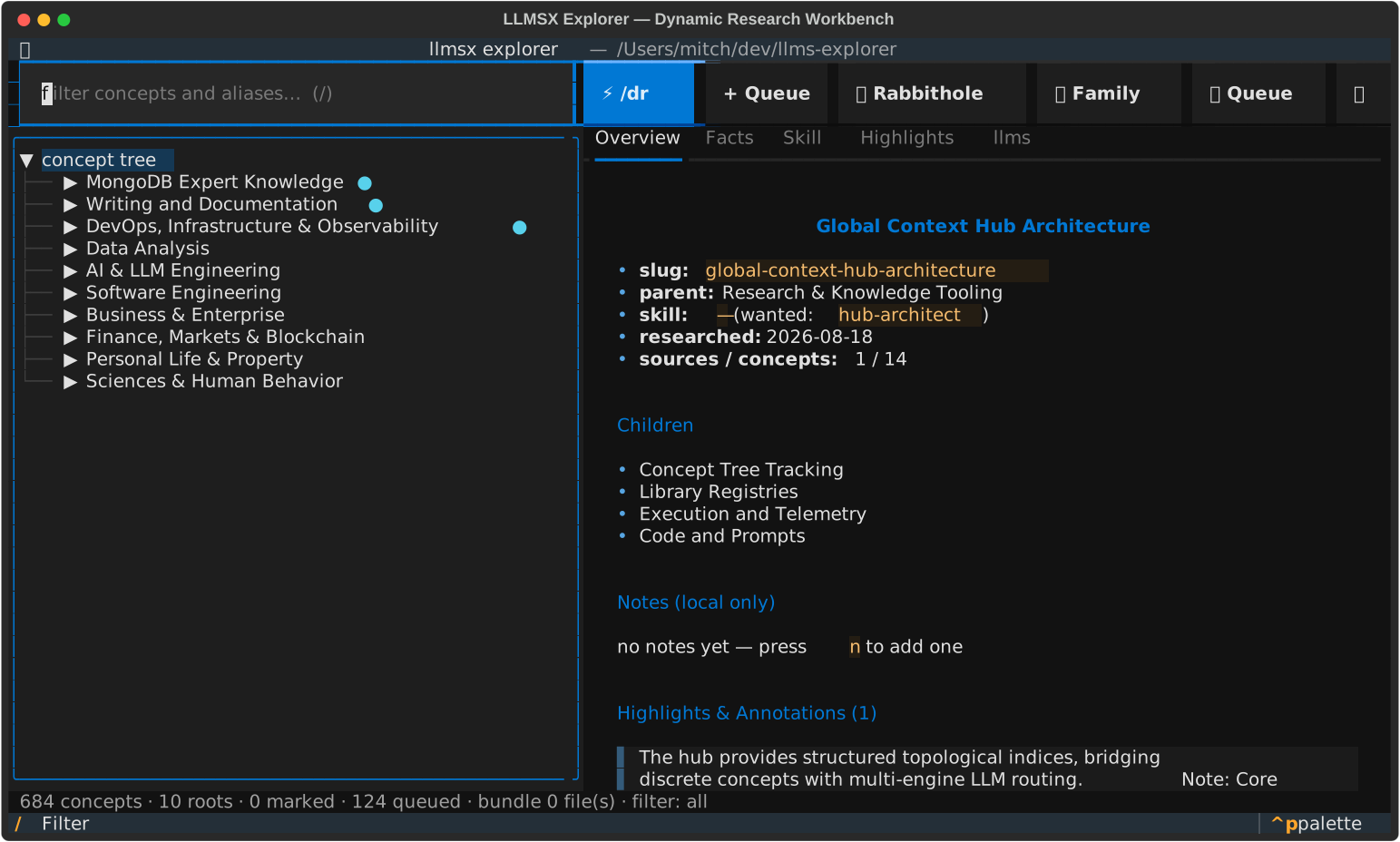
Dynamic Field Exploration
Browse hundreds of researched concepts organized in a coherent taxonomy. Frontier concepts (unexplored boundaries) are rendered dim-italic, revealing the exact edges of your current knowledge base.
Instant Multi-Engine Research
Launch deep research with one keystroke. Dispatches across Claude CLI, local Ollama models, Codex, or Antigravity agents. Supports /dr, rabbithole, andconcept-family-explorer.
Active Queue Viewer & Monitor
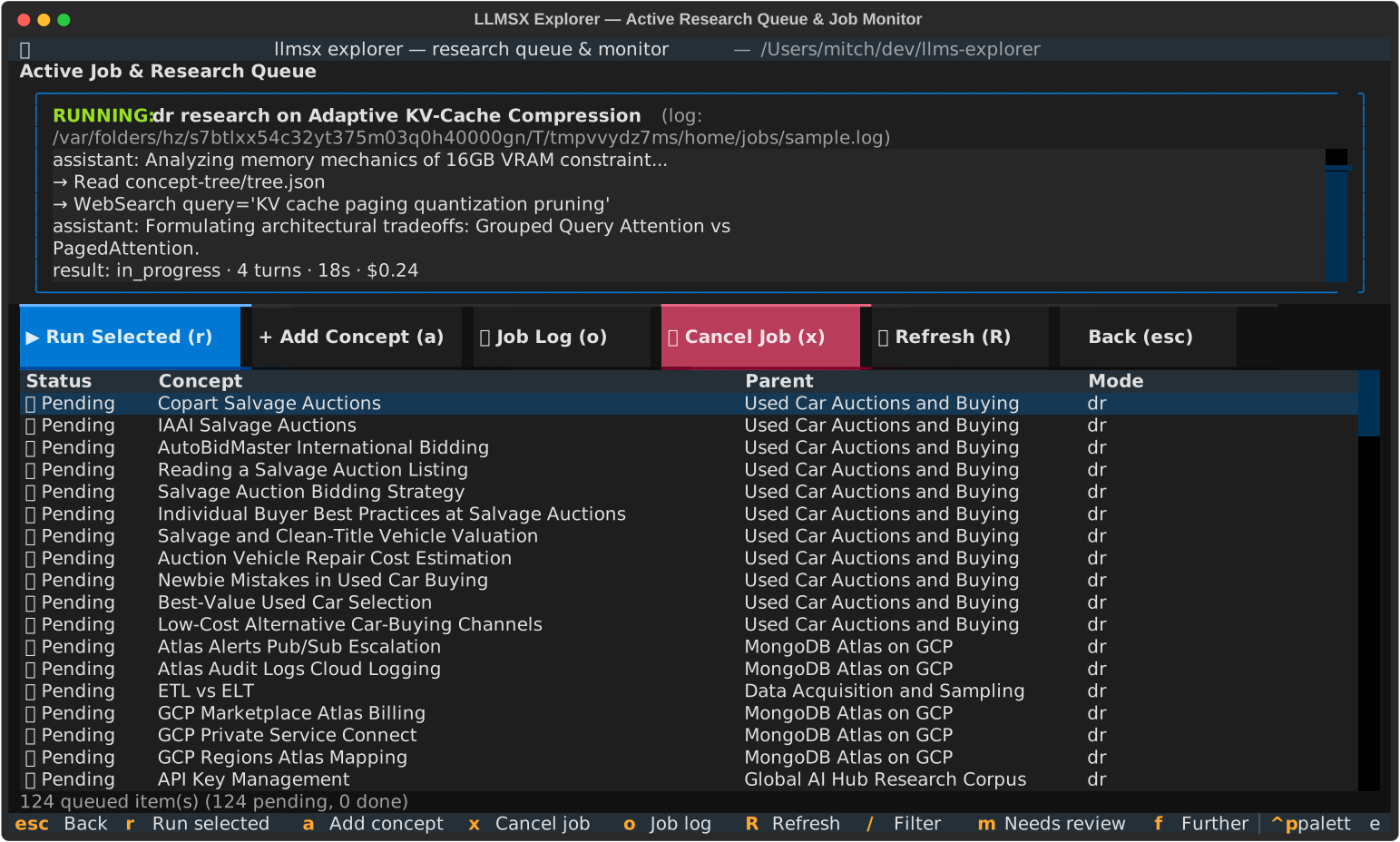
Watch research runners execute in real time. Inspect token counts, turn progress, streaming tool calls, and execution logs. If a job fails or cancels, tree snapshots are restored atomically.
Spaced Repetition Flashcards
Turn researched facts into active recall sessions using the Leitner box system. Drill definitions, latency budgets, protocol parameters, and architectural invariants.
Adaptive Branch Quizzes
Test your comprehension with dynamically generated multiple-choice quizzes across any branch of the concept tree. Explanations verify subtle mechanical distinctions.
Highlights & Annotations
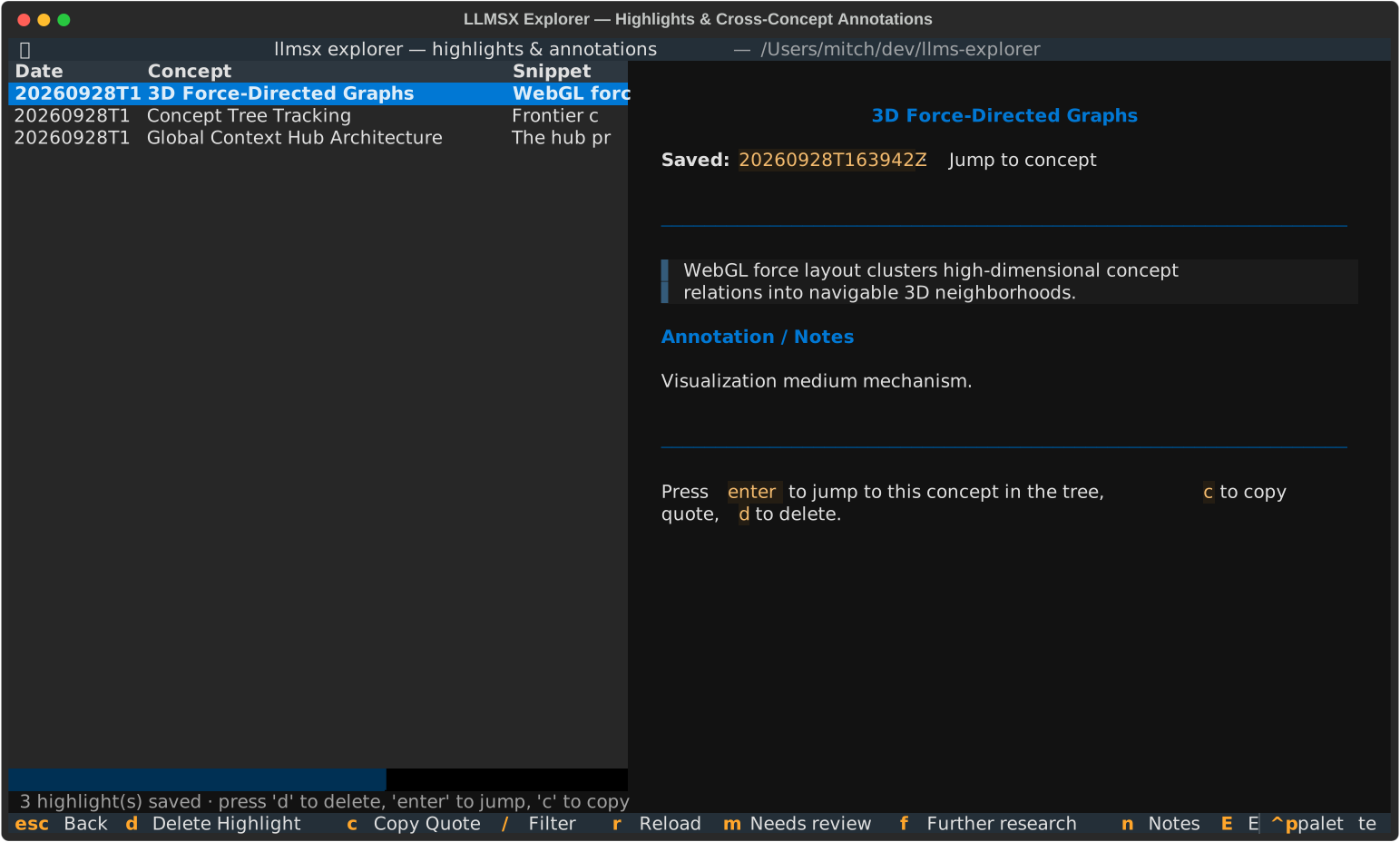
Save critical lines and insights across concepts with a single keypress. Saved snippets persist locally, show up on concept overview cards, and can be exported as structured markdown.
Dynamic and Focused Research
Traditional research starts with search engines or conversational models that reset state on every session. LLMSX Explorer operates on a durable, graph-aware concept tree. When you encounter a frontier concept or want to drill deeper into an existing node, dedicated research triggers are built right into the workbench:
⚡ /dr/dr skill with automated web crawling, document parsing, and fact extraction, outputting a complete concept pack.🐇 Rabbithole🧭 Concept Explorer+ QueueRESEARCH_QUEUE.md for batch processing while you continue exploring.🚀 Auto/dr on each one in the background. When all frontiers are saturated, it automatically identifies the most-used concept or skill across the graph and ledger and launchesconcept-family-explorer to discover new branches.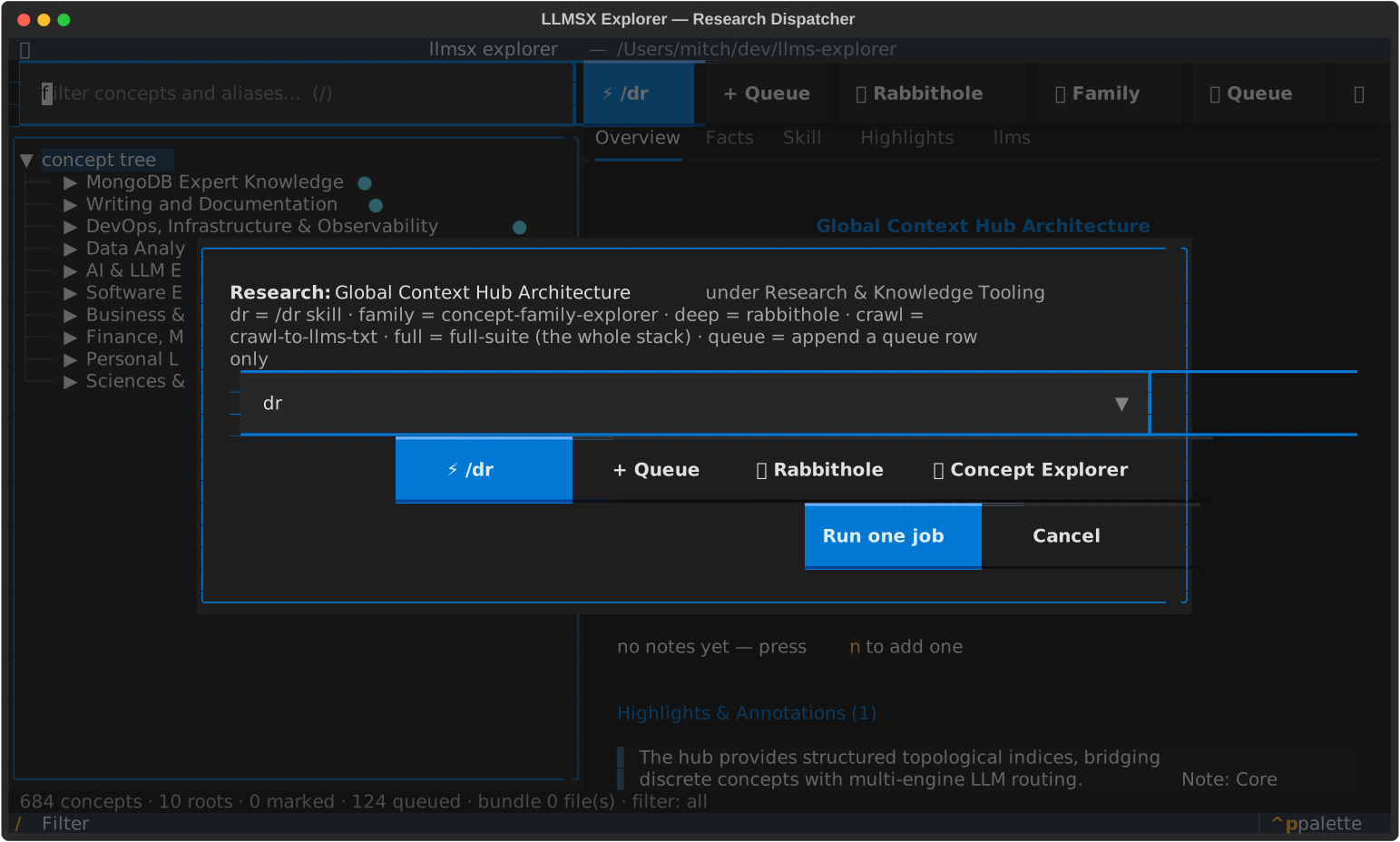
Multi-Provider LLM & API Key Configuration
LLMSX Explorer is not locked to a single AI backend. You can dispatch research, skill runs, and braindump parsing across any supported engine:
- Anthropic Claude:
claude -pwith streaming JSON telemetry and tool execution. - Google Gemini & AGY:
geminioragyCLI runner withstream-jsonoutput. Configurable viaGEMINI_API_KEYorGOOGLE_API_KEY. - OpenAI Codex:
codex exec --jsonrunner with model overrides. Configurable viaOPENAI_API_KEYorCODEX_API_KEY. - GitHub Copilot:
gh copilot -- -pCLI integration using your GitHub token (GITHUB_TOKEN/COPILOT_API_KEY). - Ollama (Local): Zero-cloud offline execution with any local model (e.g.
llama3.2,deepseek-r1,qwen2.5-coder). OptionalOLLAMA_API_KEYfor remote instances.
Press , (comma) or click the toolbar provider badge (e.g. 🤖 claude) to open Settings. Select your active provider, configure model overrides, and enter API keys. Keys are stored locally at ~/.llmsx/config.json with strict 0600 file permissions, masked on screen, and never committed to git. Click Test Provider to verify CLI binary presence and credential readiness in one click.
Live Queue Viewer & Active Job Monitor
Press u or click 📋 Queue at any time to open the live Queue Viewer. The viewer splits into an active job status monitor and a pending queue table:
- Live Streaming Telemetry: View the currently executing prompt, session ID, model name, elapsed time, turn counter, and estimated dollar cost.
- Streaming Event Log: See tool executions (
→ Read,→ Bash), assistant thoughts, and status updates as they happen. - Snapshot Protection: Before any research runner touches the repo, a git and tree snapshot is recorded. If a job crashes, times out, or is cancelled (x), the tree snapshot is atomically restored. Your repo is never left in a corrupted state.
- Queue Control: Launch any queued concept immediately (r), cancel running jobs (x), or open the raw job log (o).
Active Learning: Flashcards & Quizzes
Exploring a field is only the first half; retaining and testing that knowledge is the other. LLMSX Explorer extracts structured facts, claims, and definitions directly from researched concept packs to power active learning:
Spaced Repetition Flashcards (F)
Select any root or intermediate branch in the concept outline and press F. The workbench gathers all researched concepts under that branch and builds a flashcard deck. Cards show the concept name, its primary definition, verified facts, and architectural attributes. Grade yourself across Leitner intervals to reinforce recall.
Adaptive Branch Quizzes (Q)
Press Q to launch an interactive 4-option multiple-choice quiz. The quiz engine generates challenging probes based on real distinctions between sibling concepts. Feedback explains why the correct answer holds and why distractor options fail.
Freeform Capture: Braindumps & Daily Journals
Research is messy. You stumble across unexpected insights, transient debug logs, or raw ideas that don't fit neatly into an existing taxonomy yet.
- Braindump (W): Press W to open a capture window. Type or paste raw, unstructured thinking, code snippets, or conversational logs. The backend abstractor analyzes the text, extracts key concepts, and builds loadable
.llmsfiles. - Concept Notes (n): Press n on any concept to open a markdown editor. Notes are stored in your home directory at
~/.llmsx/notes/<slug>.mdwith0600permissions. They stay private on your workstation and are never pushed to the shared repository. - Daily Journal (J): Keep an append-only dated research journal tied to your active exploration sessions.
Highlights & Annotations Section
As you read through concept overviews, facts files, and skill references, you will find standout lines, critical architectural constants, or pithy summaries you want to keep.
Cross-Concept Knowledge Treasury
Press h or click 🔖 Highlight on any concept. A modal pops up allowing you to paste or enter the exact quote along with an optional annotation note.
- Overview Integration: Every concept overview pane automatically displays a count of your saved highlights for that topic and quotes recent excerpts.
- Dedicated Highlights Tab: Switch to the
Highlightstab in the workbench ([ or ]) to read all notes and excerpts for the selected concept. - Highlights Manager (H): Press H to open the global manager. Search through snippets across all domains, copy quotes directly to your clipboard (c), delete outdated notes (d), or jump straight to the source concept in the tree (Enter).
Complete Hotkey Reference
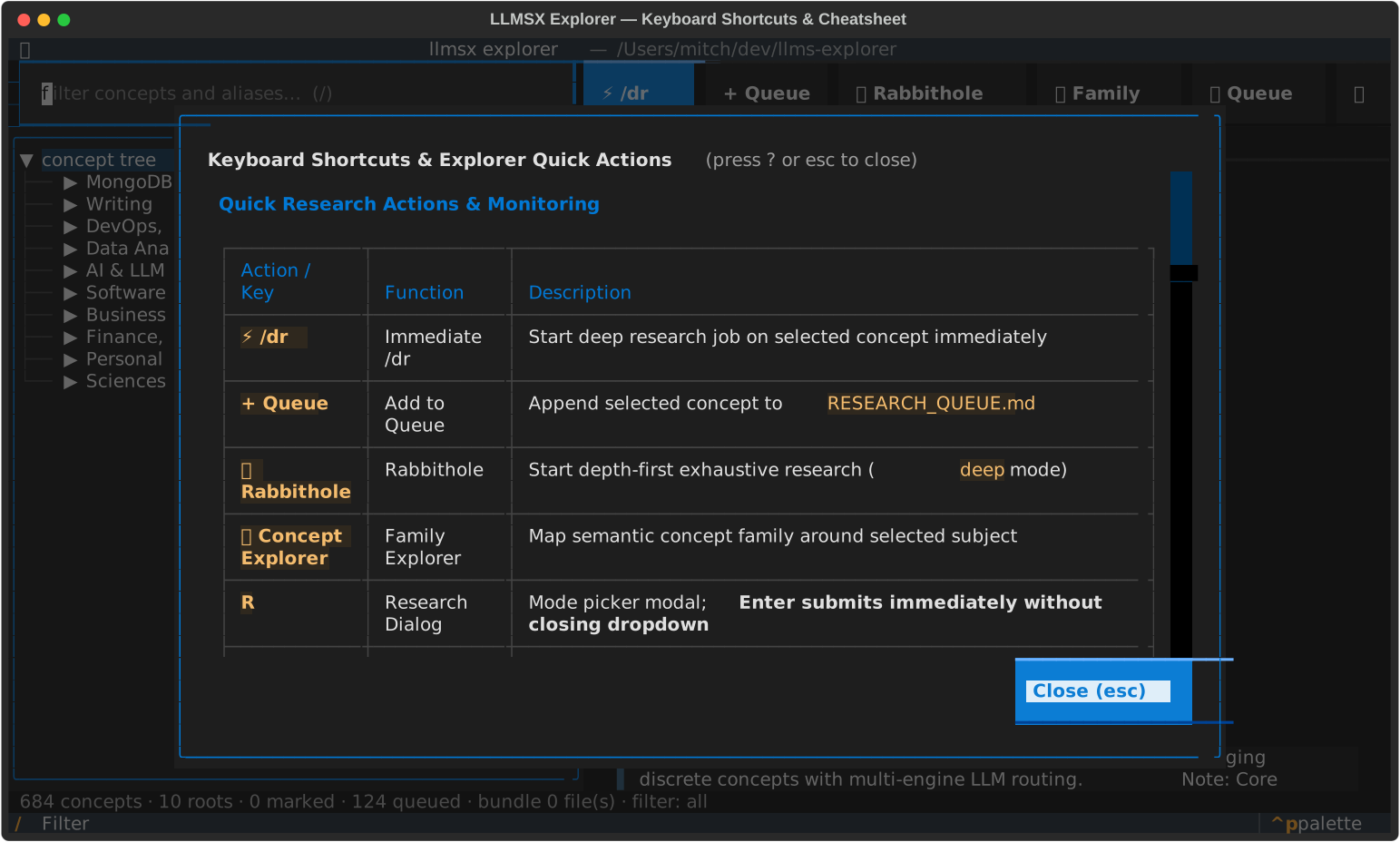
Press ? at any time in the terminal workbench to bring up the interactive cheatsheet:
Navigation
| ↑ / ↓ / j / k | Move cursor up or down in the concept outline tree |
| Enter / l / Space | Expand or collapse current node in the outline |
| / (slash) | Focus the search and filter input (matches names and aliases) |
| [ and ] | Cycle between tabs: Overview, Facts, Skill, Highlights, References |
| T | Cycle tree filter mode (all, researched, frontier, marked) |
| q | Quit the explorer workbench |
Research & Jobs
| ⚡ /dr (button) | Immediately trigger deep research on the selected concept |
| + Queue (button) | Enqueue concept for background research processing |
| 🐇 Rabbithole (button) | Trigger recursive deep-dive research into edge concepts |
| 🧭 Family (button) | Explore and map the conceptual taxonomy around the topic |
| 🚀 Auto / a | Toggle continuous autopilot /dr on frontiers, falling back to most-used concept family expansion |
| R | Open research modal with full engine selection (submits on Enter) |
| u / 📋 Queue | Open the live Queue Viewer to monitor active jobs and queue rows |
| o | View streaming job log of the currently executing research runner |
| x (in job log) | Cancel active running research job and atomically restore tree snapshot |
Highlights & Notes
| h / 🔖 Highlight | Capture and save highlighted text snippet with custom note |
| H | Open full-screen Highlights Manager (preview, copy, jump to concept) |
| n | Open private local notes editor (~/.llmsx/notes/<slug>.md) |
| e | Open current backing file in your $EDITOR |
| m | Mark concept as needs-review |
| f | Mark concept for further-research and append to queue |
Learning & Active Recall
| F | Launch spaced-repetition flashcards across the active branch |
| Q | Launch adaptive multiple-choice quiz testing core mechanics |
| W | Open Braindump capture: stream loose thoughts into structured llms files |
| J | Open daily dated research journal |
| B | Open Bundle manager to package reference sets for agent prompts |
| ? | Display complete interactive hotkey cheat sheet |
Dual Surface: Web & Terminal
LLMSX Explorer provides two complementary surfaces for engaging with the concept knowledge graph:
| Feature | Web Explorer (/tree/) | Terminal Workbench (llmsx explorer) |
|---|---|---|
| Medium | Interactive 3D force-directed WebGL canvas | High-performance Textual TUI |
| Primary Purpose | Macro visual orientation & topological exploration | Focused research execution, editing, & learning |
| Job Execution | Read-only generated views | Live multi-engine /dr, queue, & background execution |
| Active Learning | Static fact display | Interactive Leitner flashcards & quizzes |
| Local Data | Hosted publicly on GitHub Pages / CDN | Private notes (~/.llmsx/notes), highlights, & bundles |
| Git Integration | Automatic twin compilation | Direct commit, push, & sync with token masking |
Start exploring today
Install the workbench and discover what lies beyond the surface of your field.
Get LLMSX ExplorerView 3D Web Tree